Industry Leaders Focus on Progress At Sustainability Alliance Meeting

Contact: Scott Wallin
OAK BROOK, Ill. – More than 260 dairy value chain leaders – including 26 farmers – gathered April 28-30 for the 2026 Dairy Sustainability Alliance® Spring Meeting, with a focus of turning shared priorities into practical progress across the industry.
The Dairy Sustainability Alliance – created through the checkoff-founded Innovation Center for U.S. Dairy – brings together farmers, cooperatives, processors, retailers, foodservice, researchers and NGOs to collaborate to advance dairy’s shared social responsibility priorities.
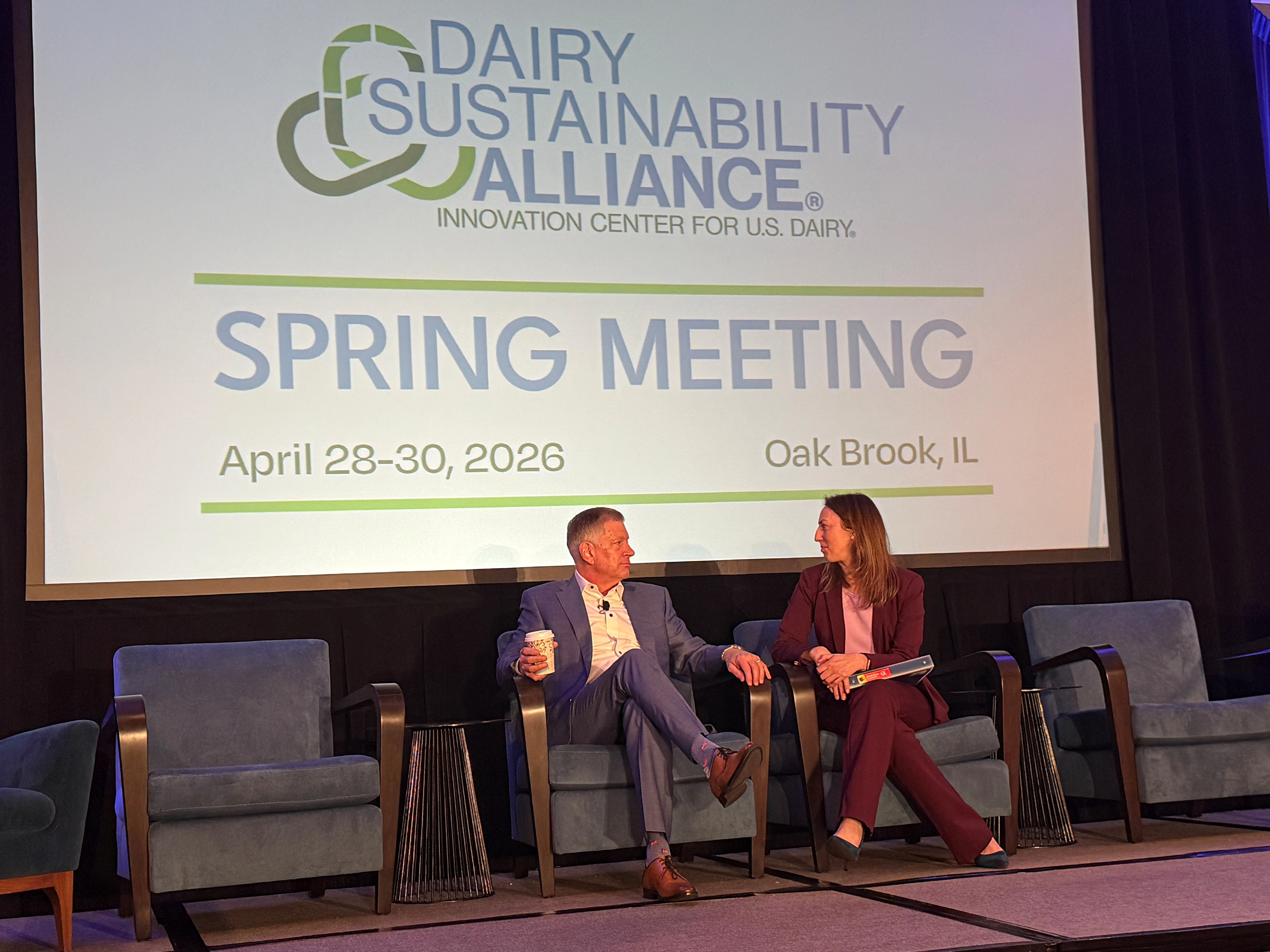
Dennis Rodenbaugh, president and CEO of Dairy Farmers of America and chair of the Innovation Center for U.S. Dairy, began the meeting by emphasizing progress starts with alignment.
“Everyone here represents something essential to our industry – farmers, cooperatives, processors and customers,” Rodenbaugh said. “All of you are here as partners in this ongoing pursuit.”
Rodenbaugh highlighted the evolution he has seen, noting a growing focus on nutrition, increased confidence in telling dairy’s story and a stronger commitment to facts and action.
“That kind of alignment doesn’t happen automatically,” he said. “It happens because this industry understands something many others do not: real progress requires shared responsibility and aligned execution.”
He pointed to the Innovation Center’s role in bringing the industry together around priorities, including nutrition, food accessibility and affordability, animal care and environmental stewardship – and turning those priorities into coordinated action.
He also underscored that sustainability in dairy is rooted in long-standing farmer practices.
“U.S. dairy farmers have been practicing sustainability for generations,” he said. “They think generationally, not quarterly. Their goal is preservation for the next generation.”
He noted significant gains in efficiency, with today’s cows producing five times more nutrition than mid-century herds while using substantially fewer resources. He stressed sustainability must be defined broadly to include environmental, economic and social outcomes.
“Ultimately, the credibility of dairy will not depend on what we do individually, but on how well we align and coordinate as an industry,” Rodenbaugh said. “This is the Alliance. This is the room where that alignment happens.”
Nutrition Momentum Creates Opportunity
A major focus of the meeting was the growing momentum around dairy’s role in health and nutrition.
Leaders from National Dairy Council and National Milk Producers Federation highlighted the 2025-2030 Dietary Guidelines for Americans, which recommend three servings of dairy per day but now include whole-fat options. At the same time, whole milk can be offered as an option in schools.
Speakers said those changes open the door for growth and new opportunities across the dairy community.
“It’s a really exciting time for dairy,” said Abbey Copenhaver, a New York dairy farmer and registered dietitian. “As a farmer, it excites me that dairy has been emphasized in the new guidelines because we want to move product. But as a dietitian, I'm excited because I truly believe in my core about the health benefits that dairy delivers for Americans.”
Sessions focused on how to turn this momentum into real demand by better connecting with consumers. Attendees got an overview of Dairy Management Inc.’s new Dairy Does More campaign designed to highlight both the familiar and unexpected benefits of dairy.
Also, Shamrock Farms shared how the company is leveraging key dairy health and wellness benefit areas and Innovation Center tools to innovate, update packaging and promote dairy nutrition at retail and to consumers.
Making Sustainability Work on Farm
Farmer-focused sessions centered on what it takes to make sustainability efforts practical and economically viable.
A look at Feed in Focus – with partners including The Nature Conservancy and the Michigan Milk Producers Association – shared lessons learned from real farms, highlighting the importance of flexibility, trusted technical support and farmer-first program design.
Other sessions showed how sustainability can translate into revenue, with farmers and leaders from Dairy Farmers of America, Newtrient, Athian and ALDI highlighting how coordinated efforts are generating payments tied to verified environmental outcomes.
Beyond the farm, discussions tackled global reporting expectations and packaging challenges.
Speakers from companies including Land O’Lakes, Schreiber Foods, HP Hood and Agri-Mark/Cabot Creamery Co-operative emphasized the need for practical, science-based approaches as customer requirements evolve.
Leaders also highlighted the role of the National Dairy FARM Program in supporting continuous improvement and building trust. New York farmer Val Lavigne, along with representatives from Land O’Lakes and Leprino, stressed how consistent, science-based standards help strengthen credibility and market access.
Measuring Progress, Driving Improvement
On the meeting’s second day, Lori Captain, group executive vice president and executive director of the Innovation Center for U.S. Dairy, shared an update on how environmental sustainability work is advancing across the industry and what it means for farmers.
Captain emphasized that expectations around sustainability are rising, with greater focus on water, transparency and broader system impacts alongside greenhouse gas emissions, even as the foundation of the work remains rooted in long-standing farmer stewardship.
She outlined how the industry is strengthening this foundation for credible progress through improved measurement and science-based tools, including updated lifecycle assessments that track greenhouse gas emissions, expanded water research and continued investment in the HERD Initiative and Greener Cattle Initiative.
“Progress in environmental sustainability does not come from a single solution,” Captain said. “It comes from science, tools and partnerships working together, and that system only matters if it holds up on farm. This work only succeeds if it works for farmers.”
Farmer Perspective Remains Central
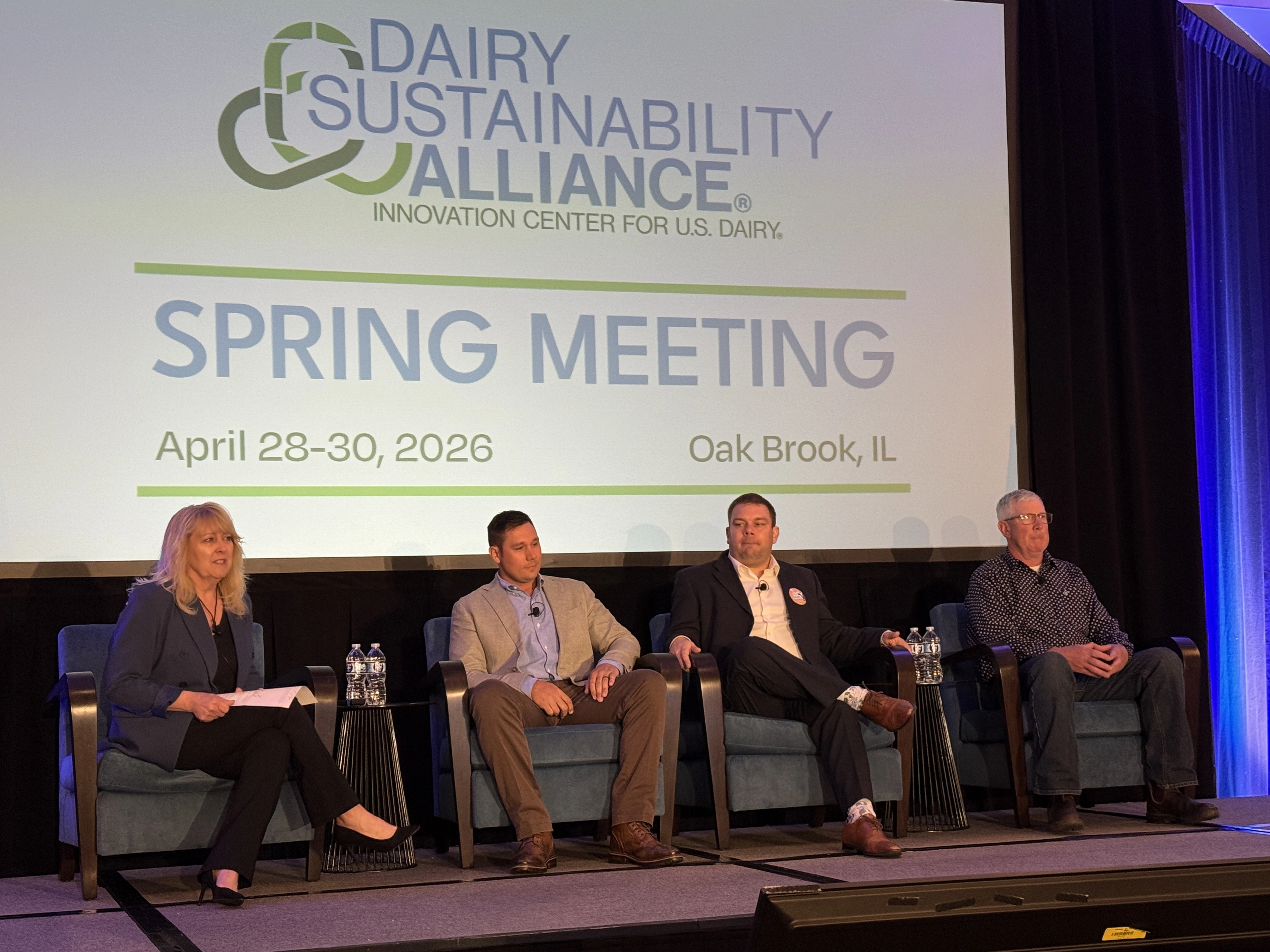
The meeting closed with a farmer-led panel that grounded the conversation in day-to-day realities on the farm. Producers David Elliott (South Dakota), Maynard Mallonee (Washington) and Ben Smith (Virginia) shared how evolving sustainability expectations are shaping decisions on their operations.
From feed and manure management to technology investments and participation in emerging programs, the panel highlighted how farmers are weighing new opportunities against real-world constraints, including cost, labor, regional differences and long-term risk.
The discussion reinforced that sustainability does not look the same on every operation, and that progress depends on solutions that work across different regions, sizes and production systems.
For information about the Innovation Center, visit https://innovationcenter.usdairy.com/
###
About the Innovation Center for U.S. Dairy
Founded by dairy farmers in 2008 through their checkoff, the Innovation Center for U.S. Dairy® is a unique national forum that brings together leaders from across the entire dairy value chain – farmers, cooperatives, processors, customers, and allied industry – to address precompetitive priorities and strengthen trust in the dairy sector. Guided by the voices and perspectives of farm and industry leaders, the Innovation Center builds alignment, sets shared priorities, and accelerates best practices on the most important topics impacting food and agriculture today, from modern wellness and environmental stewardship to food safety, nutrition, and innovation. For more information, visit usdairy.com/about-us/innovation-center.
